Private Label Vitamin: A Complete Launch Guide
Discover how to launch a private label vitamin line with expert insights on formulation, manufacturing, compliance, and marketing.
 Get a Free Quote Today!
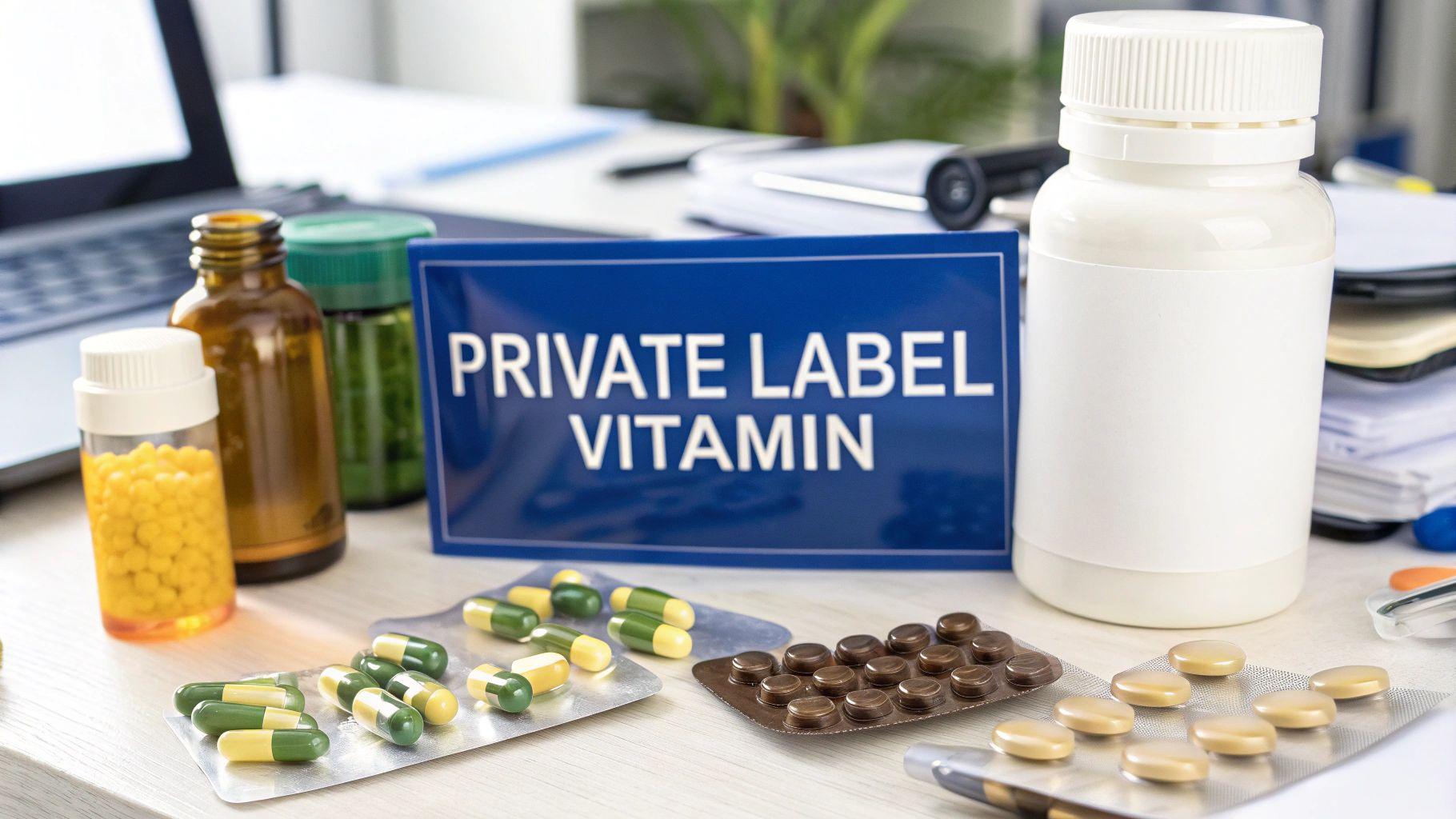
Thinking about launching your own private label vitamin line? You're in the right place. This is one of the fastest, most effective ways for an e-commerce founder or wellness entrepreneur to get a brand off the ground. By partnering with a specialty manufacturer, you put your unique branding on a proven formula, bypassing the lengthy and expensive process of custom formulation from scratch.
It’s a strategic entry into the market, letting you skip the line and launch without the massive upfront R&D investment.
Your Blueprint for a Successful Vitamin Brand
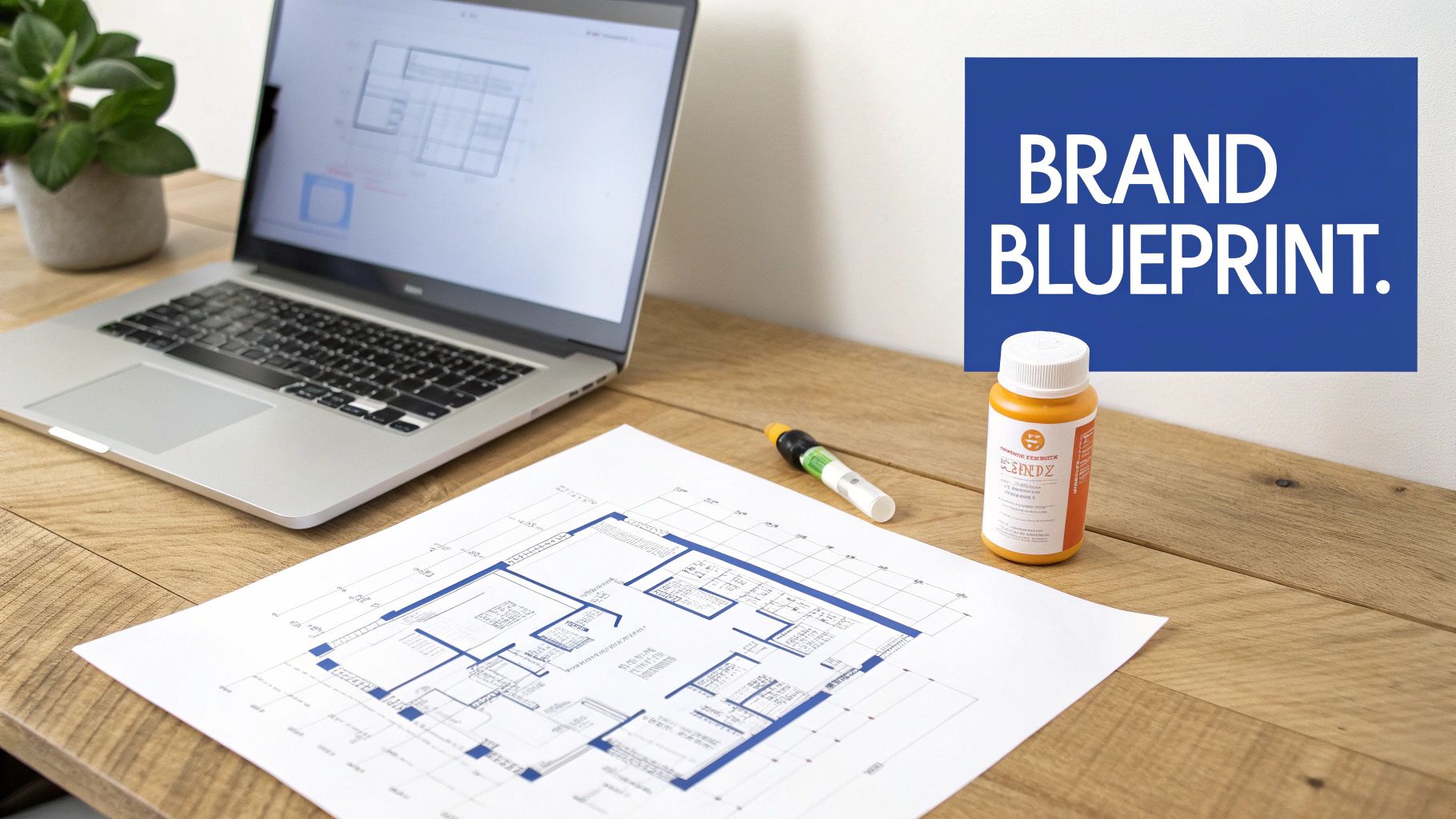
A great idea is just the beginning. To turn your concept into a trusted product that customers buy again and again, you need a clear, actionable plan. This is your blueprint—the starting point that cuts through the noise and provides clarity from day one.
The journey starts with a few key decisions. One of the first is your delivery system: will you offer traditional capsules, or will you innovate with liquid herbal supplements known for their higher bioavailability? This single choice shapes your brand positioning and target audience.
Before you go any further, map out your strategy in a detailed e-commerce business plan. This document will be your north star for market research, financial planning, and launch strategy, ensuring every move is intentional.
Defining Your Market Niche
Let’s be honest: the world doesn't need another generic multivitamin. Success in this industry comes from specificity. Before you even think about formulas, you have to know who you're selling to. A liquid B-complex for elite athletes? A botanical-infused sleep tincture for burnt-out professionals? That’s the kind of focus that wins.
Answering these questions isn't optional; it's essential.
- Who is your ideal customer? What are their biggest health frustrations and wellness goals?
- What's the competition doing? Analyze what other brands are doing well and, more importantly, identify the gaps they’re leaving open for you.
- What makes you different? Is it your superior ingredients? A more effective delivery system like liquid herbals? Or the unique brand and community you build?
A successful brand doesn't just sell a product; it sells a solution. Your unique value proposition is the promise you make to your customers—a promise of quality, tangible results, and trust.
Navigating a Growing Industry
The opportunity in the supplement space is massive. The global vitamin supplement industry was valued at around USD 68.2 billion in 2025 and is projected to more than double to a staggering USD 152.8 billion by 2035.
This boom is fueled by a global shift towards proactive health and wellness. Consumers are actively seeking high-quality products to support their well-being, creating a perfect entry point for innovative brands like yours.
This visual breaks down the core process for launching your private label brand into three simple stages.
It really is that straightforward. A powerful idea, backed by a scientifically-sound formula, brought to life by a reliable manufacturing partner. That’s the recipe for success.
Bringing Your Custom Vitamin Formula to Life
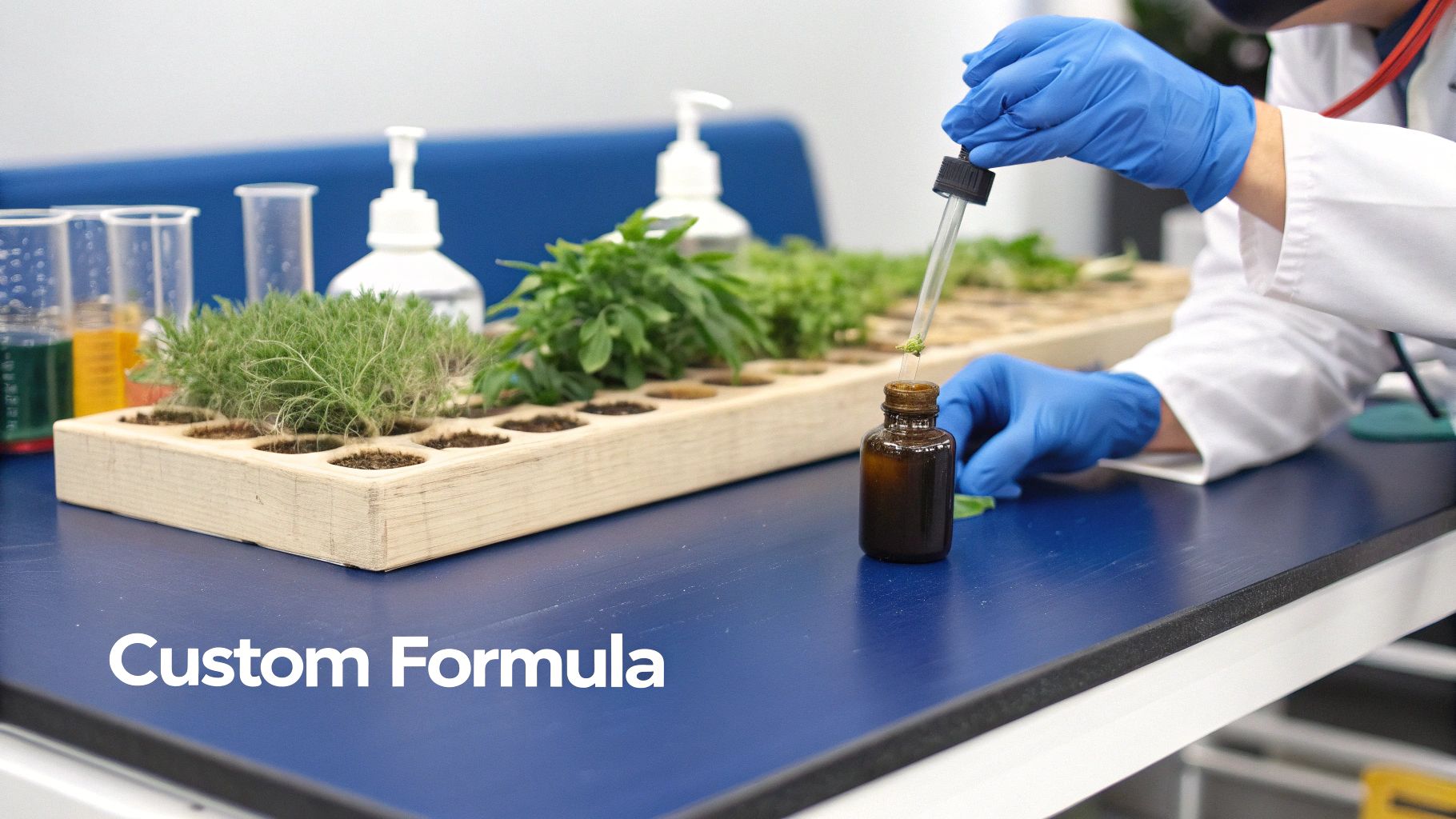
 Your product’s success hinges on its formula. This isn't just a list of ingredients; it’s the heart of your brand and the tangible promise you make to your customers.
Turning your vision into an effective, high-quality product is a collaborative partnership. Think of us as your R&D partner from concept through launch. Our role is to translate your unique idea into a market-ready product—whether that's a sugar-free elderberry syrup for immune support or a next-generation liquid herbal multivitamin.
This is where a generic concept becomes a standout private label vitamin. It’s about innovating to meet a specific consumer need.
From Vision to Vetting Ingredients
The first step is translating your idea into a functional ingredient profile. In this collaborative process, we discuss your target audience, desired health benefits, and the customer experience you want to create.
For example, if you're targeting busy professionals seeking stress relief, we move beyond a generic "stress formula." We explore specific, high-quality botanicals like Ashwagandha, L-theanine, or Rhodiola Rosea. From there, we focus on sourcing premium raw materials with proven efficacy and excellent bioavailability, ensuring your customers feel a real difference.
The best formulas are born from a partnership mindset. We act as your R&D partner from concept through launch, ensuring every ingredient serves a purpose and aligns perfectly with your brand's promise.
This is the stage where we match your vision with scientific reality, ensuring the final product is not only effective but also stable, safe, and tastes great.
Leveraging Market Trends for a Competitive Edge
Today's consumers are savvy. They read labels, research ingredients, and demand transparency. The "clean-label" movement isn't a trend; it's the new standard for building trust.
This consumer demand directly influences formulation. One recent survey found that 81% of shoppers actively seek clean-label food and supplement products. For private label vitamin brands, this insight is critical.
To meet this demand, our formulation process focuses on:
- Whole-Food Derived Vitamins: Sourcing vitamins from plant sources instead of synthesizing them in a lab.
- Natural Flavors and Sweeteners: Using options like monk fruit or stevia to create great-tasting liquid supplements without added sugar.
- Botanical Extraction Advances: Employing innovative techniques, like our forward-thinking cold-fill technology, to preserve the delicate compounds in herbal extracts and maximize potency.
Maximizing Bioavailability for Better Results
What good is a powerful ingredient if the body can't absorb it? Bioavailability—the proportion of a substance that enters circulation to have an active effect—is a massive differentiator, especially in the competitive liquid supplement market.
Liquid formulas already have an inherent bioavailability advantage over solid pills, which the digestive system must first break down. We take this further by optimizing our formulations to enhance absorption.
This might involve:
- Using Chelated Minerals: Binding minerals to amino acids to drastically improve uptake.
- Incorporating Synergistic Nutrients: Combining vitamins and minerals (like Vitamin D with Calcium) that work together to boost absorption.
- Perfecting Particle Size: Ensuring ingredients in a liquid suspension are properly emulsified for optimal contact with the digestive tract.
This commitment to superior absorption means your customers get better results, which translates directly into brand loyalty and repeat purchases. If you're ready to go deeper, you can learn more about how to create a supplement formula that truly performs. The right formula is your greatest asset.
Finding the Right Manufacturing Partner
 Choosing your manufacturing partner is the single most important decision you'll make. This isn't just about finding a supplier to fill bottles; you are choosing a strategic partner who becomes an extension of your brand.
Their quality, compliance, and reliability directly impact your reputation. A true collaborator acts as your R&D team, compliance department, and operational backbone. Getting this right frees you to focus on what you do best: building your brand and connecting with customers.
Decoding Certifications and Compliance
When vetting partners, you'll encounter a sea of acronyms: cGMP, UL, FDA-registered. These aren't just website badges; they are non-negotiable proof of quality and compliance that protects you and your customers.
Let's clarify the essentials:
- cGMP (Current Good Manufacturing Practices): This is the gold standard. Enforced by the FDA, a cGMP-certified facility adheres to strict protocols for everything—from raw material sourcing and identity testing to production and final labeling. It guarantees consistency and quality in every batch.
- FDA-Registered Facility: This is the baseline requirement. It means the manufacturer is on the FDA's radar and subject to inspection. If a potential partner isn't registered, walk away.
- UL Certified: UL is a globally respected third-party safety certification organization. UL certification means a facility has voluntarily undergone rigorous audits of its processes, demonstrating a commitment to quality that goes beyond basic requirements.
Think of these certifications as your insurance policy against contamination, incorrect dosages, or mislabeling. For a deeper dive, review these key considerations for finding a reputable supplement manufacturer.
Your manufacturer's compliance is your brand's compliance. Partnering with a fully certified facility isn't just about minimizing risk; it's about building a brand that customers can trust from their very first purchase.
Specialized Capabilities That Set You Apart
The supplement market is crowded. A generic vitamin might get you started, but specialized manufacturing capabilities give you a real competitive edge, especially with liquid herbal supplements.
A key innovation here is cold-fill technology. Many potent botanical extracts are heat-sensitive, and heat can degrade their active compounds. Our temperature-controlled extraction and cold-fill process protects these delicate ingredients, ensuring they retain their full potency in the final product.
This isn’t just a nice-to-have; it’s a critical quality differentiator. It means your customers get a product that works as promised, leading to better results, positive reviews, and strong brand loyalty. This is the kind of forward-thinking capability you should demand from a partner.
The Power of Flexibility and Reliability
Your needs will evolve. A manufacturer who only handles massive production runs is a poor fit for a startup testing the market. Conversely, a small operation can't scale when your sales take off.
The ideal partner offers true flexibility.
- Pilot Batches: The ability to run small test batches is crucial. It’s a low-risk way to validate a new formula, test flavors, or enter a new market without a huge capital investment.
- Scalable Production: As demand grows, your partner must scale with you—moving from pilot runs to full-scale production without sacrificing quality or extending timelines.
Reliability is the other half of this equation. You need a partner who provides transparent timelines and has a proven on-time delivery record. A missed deadline can lead to a stockout on Amazon or a botched launch, killing your momentum.
Working effectively with your manufacturing partner is what makes or breaks your supply chain. It's worth digging into some essential vendor management best practices to ensure your operations run smoothly from day one.
Getting Your Labeling and Testing Right
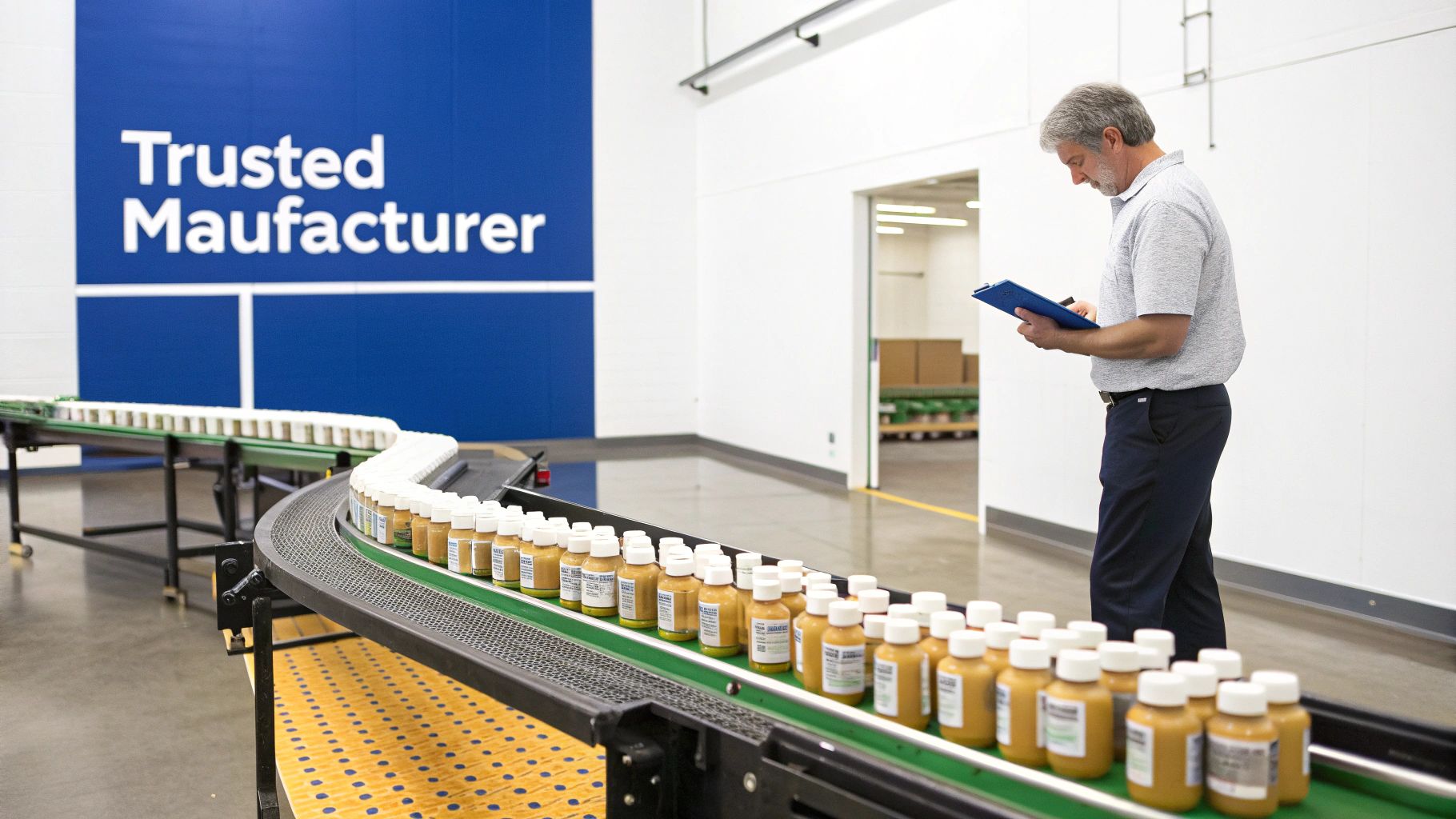
The regulatory landscape for supplements can feel like a minefield. Getting this part right isn't a suggestion—it's non-negotiable. Mastering compliance is about building a rock-solid foundation of trust with your customers and protecting your brand's reputation from day one.
This is where your partnership with a seasoned manufacturer proves its worth. We act as your compliance co-pilot, ensuring every detail—from the Supplement Facts panel to FDA disclaimers—is perfectly aligned with regulations, including the strict guidelines of e-commerce platforms like Amazon.
The Anatomy of a Compliant Label
A supplement label is a legal document. The FDA has incredibly specific requirements for what must appear on your product, where it must be placed, and even the font size used. A mistake can lead to rejected shipments or, worse, your product being pulled from the market.
Here are the core components you must get right:
- Statement of Identity: The common name of the supplement (e.g., "Liquid Vitamin C").
- Net Quantity of Contents: The amount of product in the bottle (e.g., 30 fl oz / 900 mL).
- Supplement Facts Panel: The standardized box listing all dietary ingredients, serving sizes, and amounts per serving.
- Ingredient List: A complete list of all other ingredients, like flavorings, stabilizers, or preservatives.
- Manufacturer Information: The name and address of the manufacturer, packer, or distributor.
- Required Disclaimers: The mandatory statement that the product has not been evaluated by the FDA and is not intended to "diagnose, treat, cure, or prevent any disease."
Nailing these elements requires precision. For a deeper look, our guide to dietary supplement labeling guidelines breaks down exactly what you need to know.
A compliant label is your brand's first line of defense. It demonstrates transparency and shows customers you are serious about their safety, building the trust that earns long-term loyalty.
The Critical Role of Third-Party Testing
In an industry where trust is everything, claims must be proven. Third-party testing is the gold standard for verifying the quality and integrity of your private label vitamin. It provides independent, unbiased validation that what's on your label is actually in the bottle.
A Certificate of Analysis (COA) from a reputable, independent lab provides objective proof of your product's:
- Potency: Verifying that active ingredients are present at the exact levels claimed.
- Purity: Screening for unwanted contaminants like heavy metals, pesticides, and microbial pathogens.
- Identity: Confirming that the ingredients used are exactly what they're supposed to be.
Making a COA available for every batch is more than good practice; it's a powerful marketing tool that signals your commitment to transparency and gives customers the confidence to choose your brand.
You've finalized your formula and your labels are compliant. Now comes the operational test: moving your product from production into your customers' hands. This is where a true manufacturing partnership shines, helping you confidently manage inventory, branding, and fulfillment.
Mastering Minimum Order Quantities
One of the first logistical hurdles is the Minimum Order Quantity (MOQ). For a new brand, this number can be intimidating. The secret is finding a manufacturer flexible enough to let you start with small pilot runs and scale intelligently. This protects your cash flow while you validate your product in the market.
A low MOQ allows you to:
- Test the Market: Launch with a smaller, low-risk run to gauge customer reaction before committing to larger inventory.
- Preserve Capital: Avoid tying up all your funds in stock, freeing up cash for marketing and advertising.
- Stay Agile: Gather early feedback and quickly tweak your product or messaging without being stuck with outdated inventory.
Finding a partner who supports small-batch pilot runs is a game-changer. It shifts your launch from a high-stakes gamble to a calculated business move, enabling you to grow at a sustainable pace.
As your brand gains traction, your needs will change. The right partner grows with you, seamlessly shifting from pilot runs to full-scale production without sacrificing quality or creating long lead times. That scalability means you won't have to worry about stockouts when things are taking off.
Strategic Packaging and Branding Logistics
Your packaging is more than a container; it's your customer's first physical interaction with your brand. It must protect the product, communicate your brand values, and create a memorable unboxing experience. Sourcing bottles, caps, and labels should be a collaborative effort with your manufacturer.
Consider the practical side of your choices:
- Bottle Material: Amber glass to protect light-sensitive liquid botanicals? Or durable, lightweight PET plastic for easier shipping?
- Dispensing Method: A dropper cap for precise dosage? Or a simple screw-top for your formula?
- Label Finish: A premium matte finish for a high-end brand, or a glossy, vibrant label to capture attention?
A seasoned manufacturing partner guides you through these decisions, leveraging their supplier relationships to source high-quality components that fit your budget and timeline. This integrated approach prevents logistical nightmares before they happen, saving you time and money.
Transparent Timelines for a Successful Launch
In e-commerce, timing is everything. A delayed launch or unexpected stockout can kill momentum. That's why you need a partner who provides clear, transparent, and reliable production timelines.
From the moment you place your order, you should have a clear picture of the entire production schedule, including realistic timeframes for:
- Raw Material Sourcing and Testing: Procuring and verifying every ingredient.
- Production and Bottling: The mixing, bottling, and finishing of your private label vitamin.
- Third-Party Lab Testing: Sending finished product for final validation of potency and purity.
- Labeling and Final Packaging: Applying labels and preparing the order for shipment.
Reliability is non-negotiable. A partner with a solid on-time delivery record gives you the confidence to plan marketing campaigns, manage inventory, and forecast sales accurately. That operational stability is the bedrock of a thriving, scalable brand.
Your Top Questions About Private Label Vitamins, Answered
When diving into private label supplements, questions are inevitable. Whether you're a first-time founder or a seasoned brand manager, getting straight answers is key to moving forward with confidence.
Here are the real-world concerns that come up when turning an idea into a market-ready product.
What Is the Typical Timeframe to Launch?
The number one question is always: "How long until I can start selling?" A realistic window for a private label vitamin launch is typically three to six months. This covers the entire process, from finalizing your concept to receiving the finished, bottled product.
Several factors can influence this timeline:
- Formula Complexity: A straightforward, single-ingredient formula moves faster than a complex liquid herbal blend requiring extensive sourcing.
- Ingredient Availability: Using standard, in-stock ingredients keeps you on the fast track. A rare or custom botanical will add sourcing and verification time.
- Packaging Choices: Standard bottles and caps are quick. Custom-molded bottles or unique droppers will have longer lead times.
A partner with a strong in-house R&D team and transparent timelines can help accelerate this schedule. However, always build in a buffer for non-negotiables like stability testing and third-party lab analysis. Rushing these steps is a costly mistake.
How Much Does It Cost to Start?
There's no single answer. The initial investment to launch a private label supplement brand depends entirely on your choices. Costs are tied directly to your Minimum Order Quantity (MOQ), formula intricacy, and packaging selection.
A basic vitamin formula in standard packaging has a relatively low entry barrier. Conversely, a highly customized liquid herbal tincture with premium, trademarked ingredients and bespoke packaging requires a larger upfront investment.
Don't just budget for the product. Your startup capital must cover the full launch: formulation, production, third-party testing, professional branding and label design, and a dedicated marketing budget to drive your first sales.
Can I Sell My Vitamins on Amazon?
Absolutely. Amazon is a massive marketplace for supplement brands, but you must play by their strict rules. You need to have your compliance in order from day one.
To get approved to sell dietary supplements on Amazon, you’ll need specific documentation:
- A Certificate of Analysis (COA): This is mandatory and must come from an ISO/IEC 17025-accredited lab to prove your product's purity and potency.
- Proof of cGMP Manufacturing: You must show that your supplement was produced in a facility that follows the FDA's Current Good Manufacturing Practices.
- Flawless Labeling: Your label must be 100% compliant with all FDA regulations and Amazon's own listing policies.
This is why your choice of manufacturer is so critical. A partner who understands Amazon’s requirements will save you significant headaches and help you get to market faster.
What Are the Benefits of Liquid Supplements?
While capsules and tablets remain popular, liquid supplements offer powerful advantages that can make your brand stand out. For a growing number of consumers, these benefits are a deciding factor.
Here are the main reasons brands are choosing liquids:
- Better Bioavailability: The body can often absorb liquids more quickly and efficiently. With no pill to break down, active ingredients can get into your system faster.
- Flavor and Customization: This is a major advantage. The liquid format offers incredible freedom with flavoring, allowing you to create a product that actually tastes good—a huge win for daily compliance and customer retention.
- Easier to Take: A significant portion of the population—from children to older adults—dislikes or struggles with swallowing pills. Liquids provide a more pleasant and accessible solution.
The liquid format is ideal for complex multivitamins, delicate herbal extracts, or any product where precise, customized dosing is beneficial. It opens your brand to a wider audience and provides a clear point of differentiation in a crowded market.
Ready to turn your vision for a standout liquid supplement into reality? The team at Triton Nutra Group is your dedicated partner from concept to launch, offering the expertise, flexibility, and unwavering commitment to quality your brand deserves. Request a free quote today and let’s build something exceptional together.
